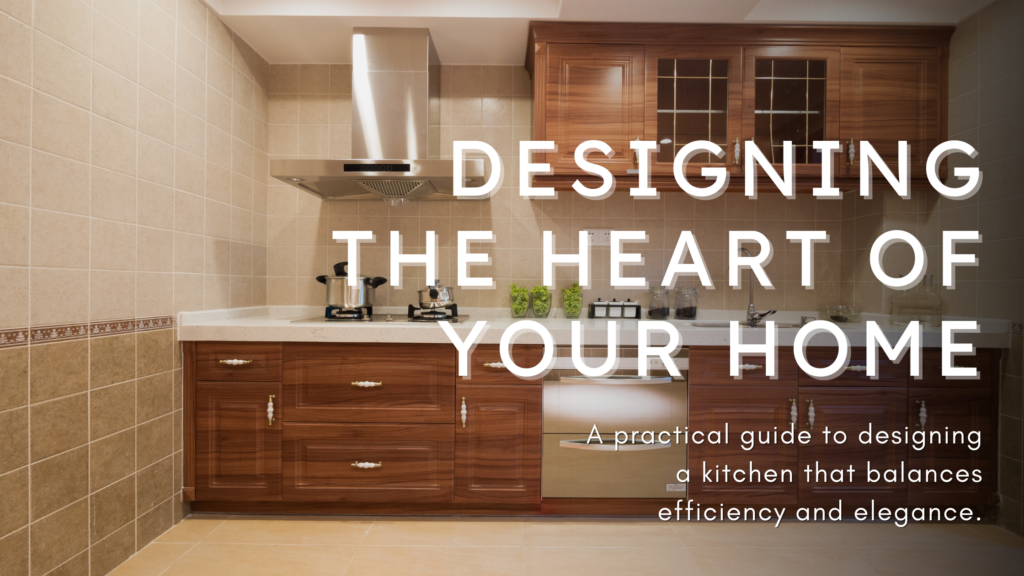
The kitchen is often described as the heart of the home. It is one of the most frequently used spaces, and unlike living rooms or bedrooms, it must perform efficiently every single day.
A well-designed kitchen does more than look elegant — it supports movement, simplifies routines, and makes daily tasks effortless. Yet many homeowners focus first on finishes and colours before addressing the most critical elements: layout, storage, lighting, ergonomics, and durability.
If you are planning your home interior design, understanding how to plan your kitchen correctly will help you avoid costly mistakes and create a space that functions beautifully for years.
1. Begin With the Layout, Not the Cabinets
One of the most fundamental principles in kitchen interior design is layout planning.
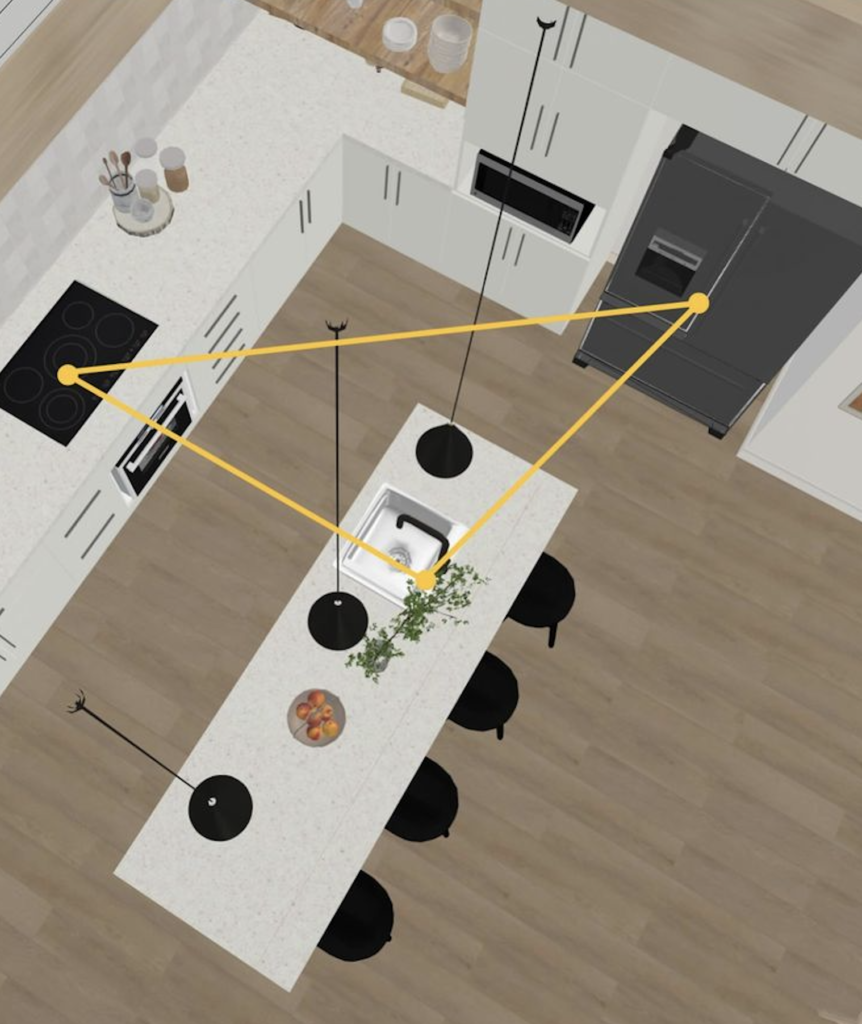
Before choosing materials or colours, determine how the kitchen will function. The arrangement of core elements — sink, cooktop, and refrigerator — plays a crucial role in efficiency. This concept is often referred to as the “work triangle.”
The ideal kitchen layout allows:
- Smooth movement between zones
- Logical workflow
- Minimal unnecessary steps
- Clear circulation space
If appliances are too far apart, cooking becomes inefficient. If they are too close, movement becomes restricted. The goal is balance.
Different homes require different layouts:
- L-shaped kitchens work well in open-plan apartments.
- U-shaped kitchens maximise storage in larger spaces.
- Parallel kitchens are efficient for compact homes.
- Island kitchens add flexibility in spacious layouts.
Good kitchen design begins with how the space moves — not how it looks.
2. Plan Storage Before You Think About Style
Storage defines whether your kitchen feels organised or overwhelming.
A common mistake in residential interior design is underestimating how much storage is required. Before designing cabinetry, evaluate:
- How many utensils you own
- Small appliance storage needs
- Pantry items
- Daily-use vs occasional-use items
- Cleaning supplies
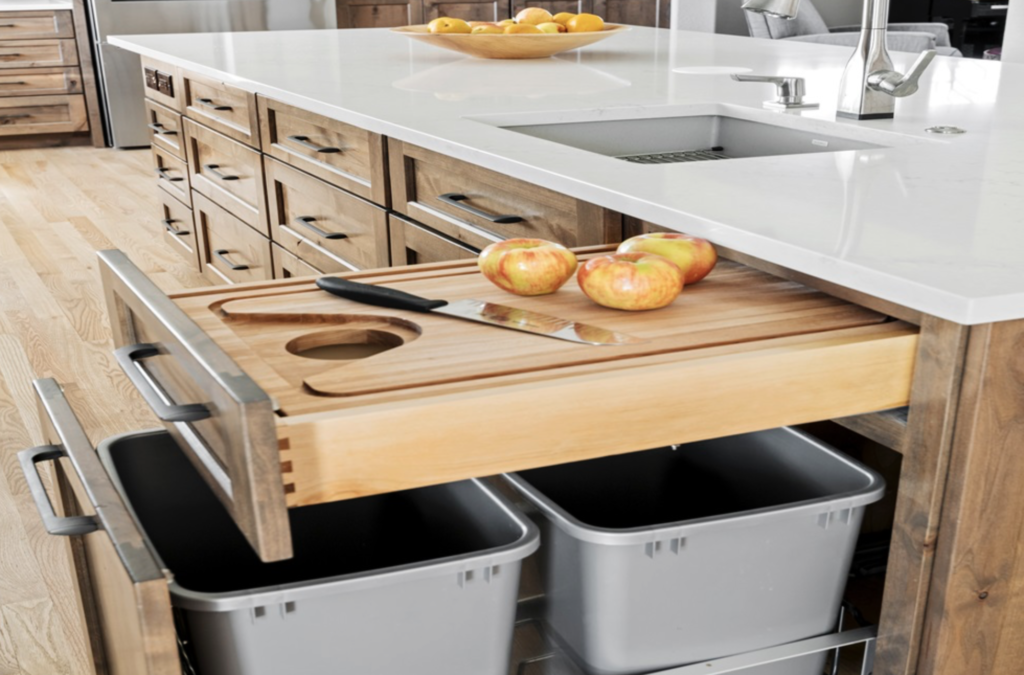
Smart kitchen storage planning may include:
- Deep drawers instead of only shelves
- Pull-out pantry units
- Corner carousel systems
- Vertical tray dividers
- Built-in waste segregation units
When storage is well-integrated into the interior design process, clutter is reduced and visual harmony is maintained.
A refined kitchen is not one with the most cabinets — it is one with intelligent organisation.
3. Prioritise Counter Space and Workflow
Counter space is one of the most underestimated components of kitchen planning.
Insufficient preparation space can make even a large kitchen feel inconvenient. Ideally, there should be enough uninterrupted counter space between the sink and cooktop for comfortable preparation.
When planning countertops, consider:
- Heat resistance
- Scratch resistance
- Maintenance requirements
- Visual compatibility with cabinetry
Durable materials such as engineered stone or high-quality granite offer long-term reliability. Matte surfaces often provide a more timeless appearance compared to high-gloss finishes.
Functional planning ensures the kitchen feels calm and controlled rather than chaotic.
4. Layer the Lighting Thoughtfully
Lighting in kitchen interior design must go beyond a single ceiling fixture.
A well-designed kitchen incorporates three layers of lighting:
Ambient Lighting
Provides overall brightness.
Task Lighting
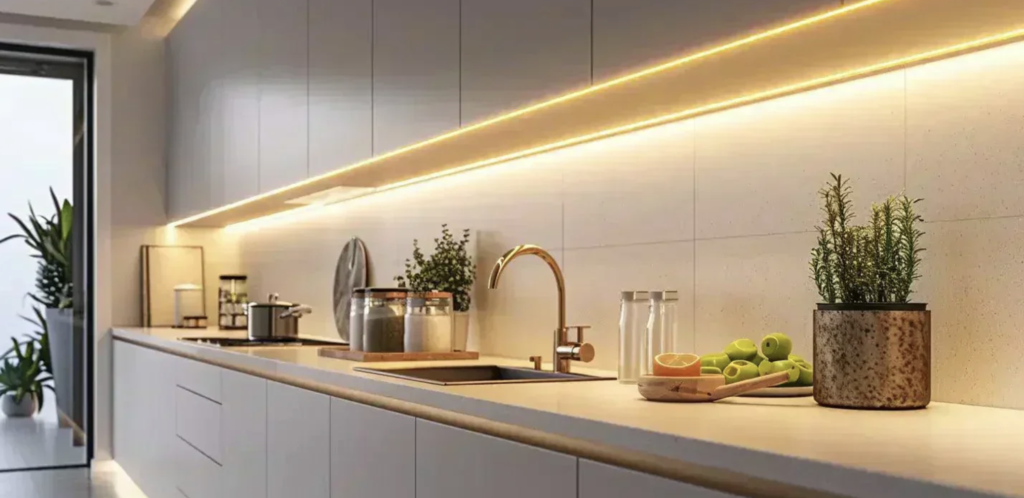
Focused lighting under cabinets to illuminate preparation areas.
Accent Lighting
Highlights textures, niches, or display shelves.
Under-cabinet lighting is particularly important. It reduces shadows on countertops and enhances both safety and aesthetics.
Natural light should also be considered. Window placement, reflective surfaces, and light-coloured finishes can enhance brightness.
In premium home interior design, lighting is planned alongside layout — not after installation.
5. Consider Ventilation and Technical Planning
Ventilation is often overlooked during design discussions, yet it significantly impacts comfort and durability.
Effective kitchen planning must include:
- Proper chimney placement
- Adequate exhaust capacity
- Air circulation pathways
Poor ventilation can affect air quality and cause long-term damage to finishes.
Technical coordination between electrical, plumbing, and carpentry drawings ensures that appliances are positioned logically and safely.
A kitchen that works beautifully is one where aesthetics and technical precision coexist.
6. Choose Materials That Age Gracefully
Kitchens endure heavy daily use. Materials must be chosen with durability in mind.
When selecting finishes, evaluate:
- Moisture resistance
- Heat tolerance
- Ease of cleaning
- Longevity
Neutral palettes — such as warm beiges, soft greys, and natural wood tones — tend to remain timeless.
Overly bold colour trends may feel appealing initially but can date quickly. A balanced material palette creates cohesion and flexibility for future updates.
Luxury in kitchen interior design is defined by thoughtful material selection, not extravagance.
7. Focus on Ergonomics
Ergonomics plays a critical role in kitchen comfort.
Important considerations include:
- Counter height suited to the primary user
- Easily accessible drawers
- Comfortable reach for upper cabinets
- Logical appliance positioning
An ergonomically designed kitchen reduces physical strain and enhances everyday usability.
This is particularly important in turnkey interior design projects, where precision in execution directly affects long-term satisfaction.
8. Balance Beauty With Practicality
A kitchen that works beautifully balances:
- Aesthetic refinement
- Functional efficiency
- Organised storage
- Durable materials
- Proper lighting
When these elements are planned intentionally, the kitchen becomes an intuitive space — one that supports life rather than complicates it.
The most elegant kitchens are not necessarily the most elaborate. They are the most thoughtfully planned.
Final Thoughts
Planning a kitchen is not about choosing the most expensive finishes or following the latest trends. It is about designing a space that reflects your routines, supports your needs, and remains relevant over time.
When layout, storage, lighting, materials, and ergonomics are carefully considered, the result is a kitchen that feels effortless and refined.
A well-designed kitchen does not demand attention. It quietly enhances everyday living.
At Studio VIII, we believe that thoughtful interior design begins with understanding how a space will be used — especially in areas as essential as the kitchen.
Function and beauty should never compete. They should coexist seamlessly.